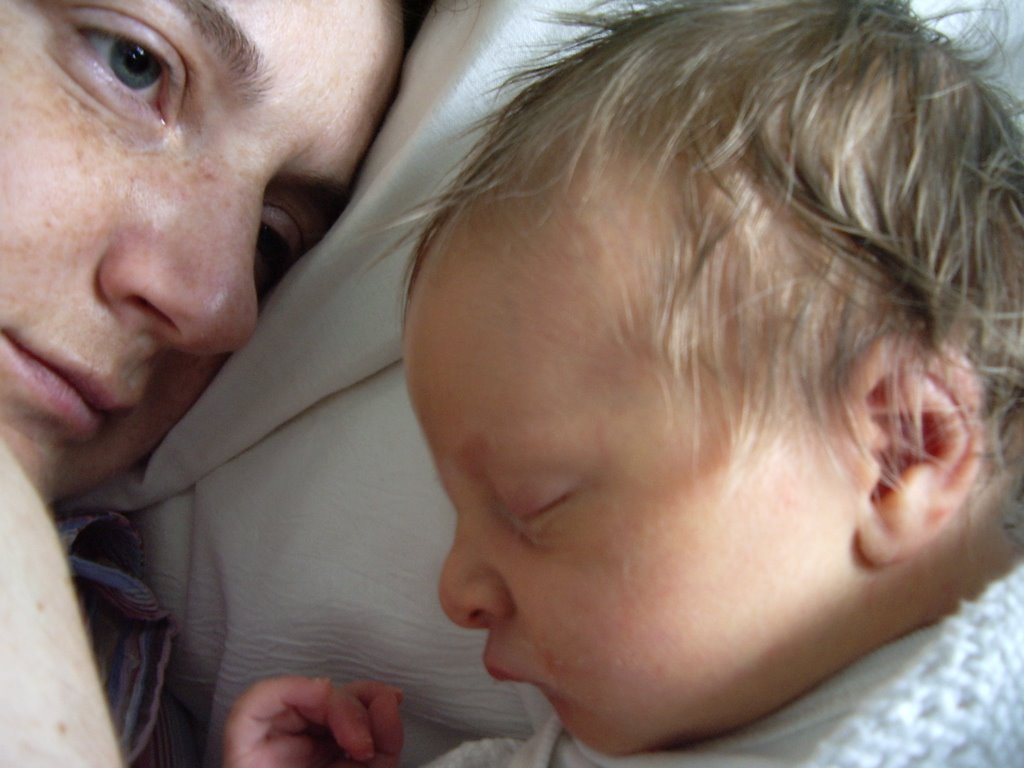
I am booked in for the 7th September!
This is the same as the EDD - Expected Delivery Date. This is unusual for a planned Caesarean. Usually they are scheduled a week before the EDD to avoid the "risk" of going into labour.
The reason given to me for waiting until the EDD was to minimise the risk to the baby. Nobody has said so in so many words, but clearly my obstetrician does not recognise any medical "risk" of my having another vaginal delivery. She has emphasised that my elective Caesarean is a matter of pure choice which it is the hospital's policy to indulge.
Not that she ever gave me the opportunity to put my case. I was all prepared for it but she wasn't in the mood for listening. So I'll put it here:
Point 1: The trauma of contractions with Sofia's delivery sent my body into total paralysis like my acutest phase of ME within half an hour of labour starting. I couldn't even speak or feel where my limbs were. This paralysis, or extreme weakness, took over a week to wear off. I couldn't sit up, or hold Sofia in my arms for several days. It was almost a week before I could shuffle to the toilet and eventually go home. My brain was totally mashed up too. I barely remember any of it. Now I look back, the impact on my early bonding with Sofia was huge. Even though bond we did somehow in our own way.
Point 2: I was considered by the doctors to be in no state to deliver vaginally by the time it came to pushing and got within 5 seconds of an emergency caesarean but miraculously the ventouse device coaxed Sofia out against everyone's expectation. But I'm clearly a very high risk case for an emergency C-section next time. I WISH AT ALL COSTS TO AVOID THE DOUBLE WHAMMY OF GOING THROUGH LABOUR AND HAVING A SURGERY AT THE END OF IT.
They all throw the same statistics at me. "It takes longer to recover from a caesarean than from a vaginal delivery." Well, that may be one of these abstract truths but this time I'm willing to bet that that rule doesn't apply to me. The pain of the wound will be immobilising, I know. But I'm reckoning I won't be half as immobilised as I was before. The trauma of surgery may trigger a relapse just as badly. True. But my instinct tells me otherwise.
I have rosy, ecstatic visions of sitting up and breastfeeding an hour or two after the birth, like normal mums. But who knows. Maybe I'll eat my words. Maybe they'll be right. The risk is on my shoulders now. Then again, maybe I'll go into labour before my due date, like so many women do, especially with a second child. And then my fate will be entirely out of my hands.
Showing posts with label strategies and tips. Show all posts
Showing posts with label strategies and tips. Show all posts
Thursday, August 23, 2007

Thursday, May 31, 2007
Advice: Getting the Best from Maternity Services
This is something I wrote for InterAction's excellent recent article on pregnancy and ME. They couldn't publish it in full so just quoted excerpts from it. But here's the original, in case it's useful to anyone.
NHS Maternity Services include the care you receive while you are pregnant, through to the birth itself and your first few days or weeks with your new baby. Like in other areas of healthcare, recognition and understanding of ME within Maternity Services is patchy. So it helps to know how the system works to ensure your needs as an ME sufferer are met.
My initial appointment (or “booking appointment”) with a midwife at 13 weeks came as a shock. Becoming pregnant with such a debilitating and often severe illness as ME felt like the biggest adventure my body could undertake. I was full of burning questions and anxieties about how I would cope. But ME/CFS is not considered a risk factor for complications in pregnancy or labour and many midwives I came across hadn’t even heard of it. All the concerns I raised regarding my disabilities were dismissed with the same advice given to all nervous first-time mums: “Don’t worry dear, it’ll be fine”.
If you have concerns ask your midwife or GP for referral to an Obstetrician
But worry I did, and added bureaucratic complications with my antenatal care left me feeling totally unsupported. Finally I complained to a head midwife that my disability hadn’t been properly addressed. It was only then that I discovered I could freely refer myself to see an obstetrician. From then on my level of care and support improved dramatically. The doctors proved to be far more knowledgeable and sensitive towards ME than the midwives and discussed all my options for the birth in detail, from pain relief to elective caesarean. And their medical authority proved invaluable in advocating for my special needs later on during and after the birth.
Discuss ME in the context of your Birth Plan.
Make sure you discuss the risk of relapse following labour and strategies to manage your energy during it. Pain relief plays a very important role in conserving energy during labour. In my case an epidural was the only way to halt the severe relapse brought on by contractions that left me paralysed within an hour starting labour. However, everyone reacts differently and many women with ME manage a vaginal birth with minimal medical intervention without much impact on their illness. So my experience of labour can’t a basis for advice. However, I would say that there is a lot of pressure on women nowadays to aim for a natural, drug-free labour. Yet there is no glory in resisting pain-relieving drugs if they save you the strength to push your baby out at the end of a long, exhausting labour or if they help to minimise a relapse afterwards. After all, you will want all your energy to look after your new baby. If you want to aim for an active birth, consider birthing positions which are upright but supported to avoid unnecessary muscular effort. If your ME is severe an elective caesarean might be your best option.
Make sure all your requirements are stated in your Booking Notes.
This is really important. During and after the birth you probably won’t see your team of antenatal doctors or midwives. You will encounter a new team who may not have heard of ME and you probably won’t have the energy to be very assertive about your needs. So the consideration given to your ME will depend on the statements and recommendations made in your Booking Notes beforehand, (the notes you carry with you throughout pregnancy and labour), ideally by a doctor. They will include your birth plan. Mine also stated that I shouldn’t be sent home if I arrived at the hospital with labour insufficiently established; I should be allowed to eat during labour to keep up my strength, and be given my own room after the delivery if available to have more chance of sleeping than on the maternity ward.
Discuss your post-natal needs too.
It may seem impossible beforehand to envisage what life will be like with your new baby. But it’s worth discussing what your needs might be with your doctor or midwife before the birth to ensure you get the best support while you are in hospital and the best possible start as a new mum. Once again your booking notes may be vital in vouching for your genuine medical need. You may have to stay in longer than normal women (I was kept in hospital for 6 days while the paralysis and weakness wore off). Don’t be put under pressure to go home early to free up bed space. My time in hospital proved invaluable for catching up on some sleep and getting breastfeeding established. These are the strategies that helped me:
I had to give Sofia to the midwives at night time so they could give her a feed and allow me an unbroken 5 hour stretch of sleep. I hadn’t planned it and felt really guilty but this was the only way I could start to recuperate from the labour.
I asked them to cup feed her rather than bottle feed at night as this method doesn’t compromise the baby’s learning process with breastfeeding.
They showed my husband how to cup feed so he could do the night-feed once we got home.
I had lots of help with learning to breastfeed because I was too weak to sit up, lift Sofia or hold her in position. I could never have managed it without a midwife holding Sofia in place for me at every feed at first.
I needed a bed wash initially as I was unable to stand or walk to the bathroom for 3-4 days. This was certainly not considered a normal procedure on a maternity ward and I had to fight for it!
NHS Maternity Services include the care you receive while you are pregnant, through to the birth itself and your first few days or weeks with your new baby. Like in other areas of healthcare, recognition and understanding of ME within Maternity Services is patchy. So it helps to know how the system works to ensure your needs as an ME sufferer are met.
My initial appointment (or “booking appointment”) with a midwife at 13 weeks came as a shock. Becoming pregnant with such a debilitating and often severe illness as ME felt like the biggest adventure my body could undertake. I was full of burning questions and anxieties about how I would cope. But ME/CFS is not considered a risk factor for complications in pregnancy or labour and many midwives I came across hadn’t even heard of it. All the concerns I raised regarding my disabilities were dismissed with the same advice given to all nervous first-time mums: “Don’t worry dear, it’ll be fine”.
If you have concerns ask your midwife or GP for referral to an Obstetrician
But worry I did, and added bureaucratic complications with my antenatal care left me feeling totally unsupported. Finally I complained to a head midwife that my disability hadn’t been properly addressed. It was only then that I discovered I could freely refer myself to see an obstetrician. From then on my level of care and support improved dramatically. The doctors proved to be far more knowledgeable and sensitive towards ME than the midwives and discussed all my options for the birth in detail, from pain relief to elective caesarean. And their medical authority proved invaluable in advocating for my special needs later on during and after the birth.
Discuss ME in the context of your Birth Plan.
Make sure you discuss the risk of relapse following labour and strategies to manage your energy during it. Pain relief plays a very important role in conserving energy during labour. In my case an epidural was the only way to halt the severe relapse brought on by contractions that left me paralysed within an hour starting labour. However, everyone reacts differently and many women with ME manage a vaginal birth with minimal medical intervention without much impact on their illness. So my experience of labour can’t a basis for advice. However, I would say that there is a lot of pressure on women nowadays to aim for a natural, drug-free labour. Yet there is no glory in resisting pain-relieving drugs if they save you the strength to push your baby out at the end of a long, exhausting labour or if they help to minimise a relapse afterwards. After all, you will want all your energy to look after your new baby. If you want to aim for an active birth, consider birthing positions which are upright but supported to avoid unnecessary muscular effort. If your ME is severe an elective caesarean might be your best option.
Make sure all your requirements are stated in your Booking Notes.
This is really important. During and after the birth you probably won’t see your team of antenatal doctors or midwives. You will encounter a new team who may not have heard of ME and you probably won’t have the energy to be very assertive about your needs. So the consideration given to your ME will depend on the statements and recommendations made in your Booking Notes beforehand, (the notes you carry with you throughout pregnancy and labour), ideally by a doctor. They will include your birth plan. Mine also stated that I shouldn’t be sent home if I arrived at the hospital with labour insufficiently established; I should be allowed to eat during labour to keep up my strength, and be given my own room after the delivery if available to have more chance of sleeping than on the maternity ward.
Discuss your post-natal needs too.
It may seem impossible beforehand to envisage what life will be like with your new baby. But it’s worth discussing what your needs might be with your doctor or midwife before the birth to ensure you get the best support while you are in hospital and the best possible start as a new mum. Once again your booking notes may be vital in vouching for your genuine medical need. You may have to stay in longer than normal women (I was kept in hospital for 6 days while the paralysis and weakness wore off). Don’t be put under pressure to go home early to free up bed space. My time in hospital proved invaluable for catching up on some sleep and getting breastfeeding established. These are the strategies that helped me:
I had to give Sofia to the midwives at night time so they could give her a feed and allow me an unbroken 5 hour stretch of sleep. I hadn’t planned it and felt really guilty but this was the only way I could start to recuperate from the labour.
I asked them to cup feed her rather than bottle feed at night as this method doesn’t compromise the baby’s learning process with breastfeeding.
They showed my husband how to cup feed so he could do the night-feed once we got home.
I had lots of help with learning to breastfeed because I was too weak to sit up, lift Sofia or hold her in position. I could never have managed it without a midwife holding Sofia in place for me at every feed at first.
I needed a bed wash initially as I was unable to stand or walk to the bathroom for 3-4 days. This was certainly not considered a normal procedure on a maternity ward and I had to fight for it!
Thursday, November 30, 2006
My Experience of a Mother's Help
When Sofia was around 10 or 11 months we hired a mother’s help temporarily while we were waiting for a nursery place to come up. It was a final acceptance of the fact that I needed help every day, whether my ME was good or bad.
Initially I had achieved a triumphant independence when Sofia was around 4 or 5 months old and I managed some full days without any help. Things then got much harder: starting solids doubled the work load, my ME went into relapse, and Sofia became more mobile and required ever more stimulation and interaction. But in spite of this I battled to hold onto that precious sense of independence which seemed the most important thing. I got into serious trouble trying to cope without help for 3 days a week. I was so out of my tree with exhaustion one evening that after putting Sofia to bed I forgot to pull up the bars of her cot. She could have fallen out and suffered serious injury. And my bond with her was under huge strain. I had nothing left in the tank to interact with her. Every drop of energy and more went into our sheer physical survival.
We worked out we could afford help for 3 hours a day twice a week. The other three days my parents would come. It gave me and my parents a much needed break from each other. At that time I found the dependence on my parents, especially my mum, took a huge emotional toll on me. For complex reasons I found managing this new relationship with my parents almost as much of a struggle as my physical illness itself.
Finding a mother’s help wasn’t easy. I found Nanny Agencies who advertised Mother’s Helps but these were really fully qualified nannies who would work alongside the mother rather than in her absence. They charged the full nanny rate plus agency fees and wanted a minimum of four hour’s work per day. One agency found me someone who was prepared to do the minimum four hours twice a week but only until she found a full time position. Still, it was too expensive.
Eventually we found Pauline through a cleaning agency. She sounded good as she was a mother with experience of working with Special Needs children for the council, as well as a cleaner. I think we paid £8 per hour including the agency fees.
I had Pauline from 10- 1 twice a week for about 10 weeks. That covered me for lunchtime which was/is my most tiring part of the day. She loved playing with Sofia. She was thorough with the chores, if a bit slow. I did find managing her quite stressful and was always glad when she left us alone with a nice tidy kitchen. Her main problem was that she was afraid to go to the park with Sofia. I only realised this after a while when I probed into where she took Sofia for walks and found out she had been pushing her around the pavements for weeks!
Initially I had achieved a triumphant independence when Sofia was around 4 or 5 months old and I managed some full days without any help. Things then got much harder: starting solids doubled the work load, my ME went into relapse, and Sofia became more mobile and required ever more stimulation and interaction. But in spite of this I battled to hold onto that precious sense of independence which seemed the most important thing. I got into serious trouble trying to cope without help for 3 days a week. I was so out of my tree with exhaustion one evening that after putting Sofia to bed I forgot to pull up the bars of her cot. She could have fallen out and suffered serious injury. And my bond with her was under huge strain. I had nothing left in the tank to interact with her. Every drop of energy and more went into our sheer physical survival.
We worked out we could afford help for 3 hours a day twice a week. The other three days my parents would come. It gave me and my parents a much needed break from each other. At that time I found the dependence on my parents, especially my mum, took a huge emotional toll on me. For complex reasons I found managing this new relationship with my parents almost as much of a struggle as my physical illness itself.
Finding a mother’s help wasn’t easy. I found Nanny Agencies who advertised Mother’s Helps but these were really fully qualified nannies who would work alongside the mother rather than in her absence. They charged the full nanny rate plus agency fees and wanted a minimum of four hour’s work per day. One agency found me someone who was prepared to do the minimum four hours twice a week but only until she found a full time position. Still, it was too expensive.
Eventually we found Pauline through a cleaning agency. She sounded good as she was a mother with experience of working with Special Needs children for the council, as well as a cleaner. I think we paid £8 per hour including the agency fees.
I had Pauline from 10- 1 twice a week for about 10 weeks. That covered me for lunchtime which was/is my most tiring part of the day. She loved playing with Sofia. She was thorough with the chores, if a bit slow. I did find managing her quite stressful and was always glad when she left us alone with a nice tidy kitchen. Her main problem was that she was afraid to go to the park with Sofia. I only realised this after a while when I probed into where she took Sofia for walks and found out she had been pushing her around the pavements for weeks!
My Task List for Mother's Help
This is what Pauline did most days:
Washing and sterilising bottles and making up feeds
Washing up from breakfast and lunch (we didn’t have a dishwasher at the time)
Cooking batches of food for Sofia to be stored in freezer.
Lifting Sofia in and out of highchair when my muscles severely affected
Cleaning up the mess after Sofia’s lunch
General tidying of toys and sweeping floor
Taking Sofia out for walk in her pushchair.
Play with Sofia for half an hour so I could rest in my room.
Some ironing if any time left.
After she left Sofia and I would have a blissful nap. Then the afternoon of 3-5.50 pm til Daddy came home wouldn’t seem so long and the work would consist mostly of giving her milk and changing her nappy.
Washing and sterilising bottles and making up feeds
Washing up from breakfast and lunch (we didn’t have a dishwasher at the time)
Cooking batches of food for Sofia to be stored in freezer.
Lifting Sofia in and out of highchair when my muscles severely affected
Cleaning up the mess after Sofia’s lunch
General tidying of toys and sweeping floor
Taking Sofia out for walk in her pushchair.
Play with Sofia for half an hour so I could rest in my room.
Some ironing if any time left.
After she left Sofia and I would have a blissful nap. Then the afternoon of 3-5.50 pm til Daddy came home wouldn’t seem so long and the work would consist mostly of giving her milk and changing her nappy.
Better Use of a Mother's Help
This is how I would do things differently in hindsight:
Left the mother’s help alone more to play with Sofia or take her out while I go to read/go for a walk/have general Me-time in another room.
At the time I couldn’t contemplate being in the house with Sofia but not with her. I felt so inadequate as a mum that I tried to compensate by being by her side in every moment. The only time I would leave her with Pauline would be when I was catatonic with exhaustion to go an crash on my bed. Never to do something enjoyable for myself. I know my feelings were normal for a first-time mum. But I would have been much happier if I had been able to let go more. And Pauline probably would have been happier too.
Vetted my employee more thoroughly to make sure she was efficient with the chores and comfortable going to parks and toddler groups.
Used baby food jars instead of getting her to cook for Sofia, and got a dishwasher earlier to save on the washing up.
It didn’t make any economical sense paying someone to cook for Sofia instead of buying jars. Or nutritional sense for that matter, with all the range of organic cuisine for babies these days. But I had this stubborn desire to be like the other mums I knew and thought Pauline should do the things I would like to do for Sofia had I had more energy.
Left the mother’s help alone more to play with Sofia or take her out while I go to read/go for a walk/have general Me-time in another room.
At the time I couldn’t contemplate being in the house with Sofia but not with her. I felt so inadequate as a mum that I tried to compensate by being by her side in every moment. The only time I would leave her with Pauline would be when I was catatonic with exhaustion to go an crash on my bed. Never to do something enjoyable for myself. I know my feelings were normal for a first-time mum. But I would have been much happier if I had been able to let go more. And Pauline probably would have been happier too.
Vetted my employee more thoroughly to make sure she was efficient with the chores and comfortable going to parks and toddler groups.
Used baby food jars instead of getting her to cook for Sofia, and got a dishwasher earlier to save on the washing up.
It didn’t make any economical sense paying someone to cook for Sofia instead of buying jars. Or nutritional sense for that matter, with all the range of organic cuisine for babies these days. But I had this stubborn desire to be like the other mums I knew and thought Pauline should do the things I would like to do for Sofia had I had more energy.
Mother's Help or Nursery/Childminder?
For us, having a mother’s help twice a week for 3 or 4 hours each time cost the same as having Sofia in a subsidised nursery two full days a week. Initially I thought the mother’s help must be the better solution. Why send her away if I could have her at home with me where most research said was better for her development? I’m glad I tried it out while we were waiting for the nursery place to come up because now I feel differently. And if there ever was a decision to make about mother’s help vs nursery, Pauline made it for us because she left suddenly, without any notice, to take up a full-time job, four weeks before Sofia was due to start nursery.
It was great to have that practical help with chores and to know that Sofia was getting out for some fresh air. But having a mother's help didn’t give me the mental break I really needed to recharge my batteries. Although I had physical rest, the hours that Pauline was here were spent constantly keeping an eye on what she was doing, how long she was taking, agonising over whether to hurry her up or suggest she do things differently, or leave her to her own devices. It did give me more energy to interact and play with Sofia but I felt watched doing so in our small, open-plan flat. And I felt somewhat uncomfortable about being laid up on the sofa a lot of the time and giving orders. I constantly felt aware of not appearing to be a proper/normal mum, ie hands on and active and in constant physical contact with my child.
Those were all my problems, not Pauline’s of course. She never said anything inappropriate or questioned me. But I was perpetually trying to keep a grip on the situation and feel in charge of what Sofia and Pauline were doing, in order to make up for my lack of physical competence. And that made me feel a lazy, bossy mother! I know these are general issues in people management, of which I had almost no previous experience. And with hindsight I would try to do things differently.
It was great to have that practical help with chores and to know that Sofia was getting out for some fresh air. But having a mother's help didn’t give me the mental break I really needed to recharge my batteries. Although I had physical rest, the hours that Pauline was here were spent constantly keeping an eye on what she was doing, how long she was taking, agonising over whether to hurry her up or suggest she do things differently, or leave her to her own devices. It did give me more energy to interact and play with Sofia but I felt watched doing so in our small, open-plan flat. And I felt somewhat uncomfortable about being laid up on the sofa a lot of the time and giving orders. I constantly felt aware of not appearing to be a proper/normal mum, ie hands on and active and in constant physical contact with my child.
Those were all my problems, not Pauline’s of course. She never said anything inappropriate or questioned me. But I was perpetually trying to keep a grip on the situation and feel in charge of what Sofia and Pauline were doing, in order to make up for my lack of physical competence. And that made me feel a lazy, bossy mother! I know these are general issues in people management, of which I had almost no previous experience. And with hindsight I would try to do things differently.
Hiring a Mother's Help: Points to Consider
It’s difficult to find someone prepared to work part-time hours on a long-term basis. Having a high turnover of short-term assistants who are biding their time while they seek full-time employment isn’t good for you or your baby.
Therefore the more hours you can afford to pay for the better chance you have of finding someone suitable on stable basis, eg from a nanny agency.
If you use someone who is not a registered nanny you can’t claim tax credits.
It helps if the person knows the area and is comfortable going to mums n toddler groups with your baby, as well as the park in fine weather, if you can’t get to them yourself. This becomes more important when they are toddlers and need the stimulation of different environments and other children to learn social skills.
If it's your first baby and your mother's help is an experienced nanny, she will probably have a better idea than you of what your baby's needs are at their stage of development. This could make you feel undermined, especially if, like me, you lack confidence anyway because of your physical incapacities.
Therefore the more hours you can afford to pay for the better chance you have of finding someone suitable on stable basis, eg from a nanny agency.
If you use someone who is not a registered nanny you can’t claim tax credits.
It helps if the person knows the area and is comfortable going to mums n toddler groups with your baby, as well as the park in fine weather, if you can’t get to them yourself. This becomes more important when they are toddlers and need the stimulation of different environments and other children to learn social skills.
If it's your first baby and your mother's help is an experienced nanny, she will probably have a better idea than you of what your baby's needs are at their stage of development. This could make you feel undermined, especially if, like me, you lack confidence anyway because of your physical incapacities.
Thursday, October 12, 2006
0-3 Months
What help did I need?
For the first week, which was spent in hospital, I could do nothing except try to keep up with breastfeeding every 2-3 hours. M was in hospital with me the whole time, taking Sofia when she cried so I could rest, even helping me with my own personal care. I didn’t change a single nappy for the first week.
Getting home from hospital was terrifying! I could still barely walk from exhaustion and what scared me the most was not being able to give Sofia away to the midwives at night. Sleep deprivation had been my biggest worry throughout the pregnancy. Although M was going to be on night duty we have a tiny flat and I worried that her crying would keep me awake. He took her on the sofabed in the living room at first. But I soon realised that luckily she did have a longish stretch of sleep (about 4 hours) which became our long stretch, and then after a breastfeed she would go back to sleep and we could too. So we soon put her in her moses basket by our bed. For about two months after the birth my quality of sleep was surprisingly good! I could drop off and sleep soundly and refreshingly as soon as I finished feeding. There was none of the terrible ME insomnia where you’re awake for no reason and feel sleep deprived the next day. I think there was still a high level of hormones from the pregnancy which had suppressed certain aspects of ME. When I did have a relapse at eight weeks I suffered much more from the ME-related insomnia, even though Sofia was sleeping well at that time, than I did from having the broken sleep due to her crying and feeding.
Our plan had always been that M would give Sofia a bottle in the night to give me a longer stretch of sleep. At the beginning it was sometimes two bottles if she was hungry again straight away. At first he cup feed her, rather than bottle feeding (see entry in Birth about first days in hospital) not to compromise the establishment of breastfeeding. Standard advice is to wait around 6 weeks before introducing a bottle so as not to confuse baby, but luckily Sofia worked it out for herself.
The first month was a blur that I can hardly remember! M was fortunately off work for a month and his mother came to stay for three weeks. After that my mum stepped in and came around most days. So I had plenty of helping hands,. There were lots of emotional issues around dependency for me at this stage. I’ll deal with them elsewhere (under Bonding). The main help I needed was for doing all the washing and cooking, (some of which I had been able to do before Sofia). Half the time I managed to change Sofia by myself; the rest of the time others did it for me. And often I needed help with breastfeeding because I had to install a complex system of cushions to bring Sofia up to the right height and position because my arm muscles couldn’t cope with the strain of holding her in place. When I was really tired people would lift her into place for me. The hardest aspect of the dependency on others was with breastfeeding: not feeling that I could feed my baby spontaneously and independently like other mums did. It was about 6 or 8 weeks before I even attempted feeding outside the house, with my cushions in tow. Whereas the other mums I knew were at it here, there and everywhere and made it look so enviably easy from the word go. Plus it was very painful for me for about 7 weeks, which of course can happen to anyone.
Strategies for coping:
Well, I was a Sofamum in the true sense of the word – when I wasn’t in bed, that is. Apart from the fact I didn’t have the energy to cook, do the washing etc, lifting and carrying Sofia around the flat was very, very exhausting. I restricted it to the bare minimum: once or twice a day when I was on my own to put her to sleep in her moses basket in our room. Luckily we have no stairs as I couldn’t manage carrying her upstairs at all.
The rest of the time she was with me on the sofa most of the day, often sleeping next to me, or on top of me. I tried to have everything to hand around our little island of survival. I had a changing bag beside me (hopefully) stocked up with enough nappies for the day. I used a changing mat made of towelling with a plastic backing (any kind would do though) and changed her beside me on the sofa. (Yes, it did get weed on quite a few times…) But I did often need people’s help nonetheless to fetch me clean water and a change of clothes when they got poo’d on. Once she reached about 4 months and couldn’t be left on the sofa in case she rolled over, I had to change her on the floor.
I almost gave up breastfeeding many a time when the combination of pain, exhaustion and sheer drudgery of setting everything up for feeding every 2-3 hours overwhelmed me. I would often feel low and tearful in the afternoons but bright and cheery in the mornings. I think that was due to the pattern of hormones still raging around at that stage. I found it very helpful to leave Sofia to others and go for a short 5-10 min walk up the road and back once I had enough energy. It’s important for your sanity to try and step back from the constant demands of crying, feeding etc and do something for yourself even for five minutes if possible.
For the first couple of months I think I had someone around most of the time. But I sometimes managed to look after Sofia for 2-3 hours on my own and it worked wonders for the bond between us, even though it was hard and scary at first, not knowing whether exhaustion would overwhelm me or if she might scream and scream and I wouldn’t be able to cope alone. I finally felt in charge of my baby and developed a dialogue with her, just by chatting away to her. I knew her smiles (after 4 weeks) were just for me. I felt I was protecting her and nurturing her. When there are constantly others around you don’t really develop an interaction with your baby in the same way. Others always want the smiles for themselves and want to get their share of attention.
I tried to be the one who decided when she needed to feed, when she needed to sleep, and when she should have a kick on her playmat. It was very hard as other people had their points of view and when you’re inexperienced you don’t necessarily get it right even if it is your baby. All new mums experience this frustration of conflicting advice and uncertainty when getting to know their baby’s needs. But with ME it’s compounded. You have people’s well-meaning advice around you constantly if you need their help. And it’s harder to assume authority if you can’t actually do the task of changing, or putting to bed, or stopping baby crying by carrying it around, by yourself.
Looking Back now that Sofia's 18 months
The most striking thing is how my muscles have strengthened as she has grown. This is contrary to all expectations and previous experience with my ME. Pushing myself to increase muscle strength and exercise tolerance always made me relapse in the past. I never thought my muscles would be able to gradually get stronger. I find it easier to lift and carry Sofia now that she weighs 9.5 kilos (a featherweight for her age) than initially when she weighed only 3.5k! I still only do it when I have to, mind you. I rejoice in it but I don't know how to explain this ME anomaly. Except that I have experienced a slight improvement in my health generally in the last two years. I think this is unrelated to having a baby.
For the first week, which was spent in hospital, I could do nothing except try to keep up with breastfeeding every 2-3 hours. M was in hospital with me the whole time, taking Sofia when she cried so I could rest, even helping me with my own personal care. I didn’t change a single nappy for the first week.
Getting home from hospital was terrifying! I could still barely walk from exhaustion and what scared me the most was not being able to give Sofia away to the midwives at night. Sleep deprivation had been my biggest worry throughout the pregnancy. Although M was going to be on night duty we have a tiny flat and I worried that her crying would keep me awake. He took her on the sofabed in the living room at first. But I soon realised that luckily she did have a longish stretch of sleep (about 4 hours) which became our long stretch, and then after a breastfeed she would go back to sleep and we could too. So we soon put her in her moses basket by our bed. For about two months after the birth my quality of sleep was surprisingly good! I could drop off and sleep soundly and refreshingly as soon as I finished feeding. There was none of the terrible ME insomnia where you’re awake for no reason and feel sleep deprived the next day. I think there was still a high level of hormones from the pregnancy which had suppressed certain aspects of ME. When I did have a relapse at eight weeks I suffered much more from the ME-related insomnia, even though Sofia was sleeping well at that time, than I did from having the broken sleep due to her crying and feeding.
Our plan had always been that M would give Sofia a bottle in the night to give me a longer stretch of sleep. At the beginning it was sometimes two bottles if she was hungry again straight away. At first he cup feed her, rather than bottle feeding (see entry in Birth about first days in hospital) not to compromise the establishment of breastfeeding. Standard advice is to wait around 6 weeks before introducing a bottle so as not to confuse baby, but luckily Sofia worked it out for herself.
The first month was a blur that I can hardly remember! M was fortunately off work for a month and his mother came to stay for three weeks. After that my mum stepped in and came around most days. So I had plenty of helping hands,. There were lots of emotional issues around dependency for me at this stage. I’ll deal with them elsewhere (under Bonding). The main help I needed was for doing all the washing and cooking, (some of which I had been able to do before Sofia). Half the time I managed to change Sofia by myself; the rest of the time others did it for me. And often I needed help with breastfeeding because I had to install a complex system of cushions to bring Sofia up to the right height and position because my arm muscles couldn’t cope with the strain of holding her in place. When I was really tired people would lift her into place for me. The hardest aspect of the dependency on others was with breastfeeding: not feeling that I could feed my baby spontaneously and independently like other mums did. It was about 6 or 8 weeks before I even attempted feeding outside the house, with my cushions in tow. Whereas the other mums I knew were at it here, there and everywhere and made it look so enviably easy from the word go. Plus it was very painful for me for about 7 weeks, which of course can happen to anyone.
Strategies for coping:
Well, I was a Sofamum in the true sense of the word – when I wasn’t in bed, that is. Apart from the fact I didn’t have the energy to cook, do the washing etc, lifting and carrying Sofia around the flat was very, very exhausting. I restricted it to the bare minimum: once or twice a day when I was on my own to put her to sleep in her moses basket in our room. Luckily we have no stairs as I couldn’t manage carrying her upstairs at all.
The rest of the time she was with me on the sofa most of the day, often sleeping next to me, or on top of me. I tried to have everything to hand around our little island of survival. I had a changing bag beside me (hopefully) stocked up with enough nappies for the day. I used a changing mat made of towelling with a plastic backing (any kind would do though) and changed her beside me on the sofa. (Yes, it did get weed on quite a few times…) But I did often need people’s help nonetheless to fetch me clean water and a change of clothes when they got poo’d on. Once she reached about 4 months and couldn’t be left on the sofa in case she rolled over, I had to change her on the floor.
I almost gave up breastfeeding many a time when the combination of pain, exhaustion and sheer drudgery of setting everything up for feeding every 2-3 hours overwhelmed me. I would often feel low and tearful in the afternoons but bright and cheery in the mornings. I think that was due to the pattern of hormones still raging around at that stage. I found it very helpful to leave Sofia to others and go for a short 5-10 min walk up the road and back once I had enough energy. It’s important for your sanity to try and step back from the constant demands of crying, feeding etc and do something for yourself even for five minutes if possible.
For the first couple of months I think I had someone around most of the time. But I sometimes managed to look after Sofia for 2-3 hours on my own and it worked wonders for the bond between us, even though it was hard and scary at first, not knowing whether exhaustion would overwhelm me or if she might scream and scream and I wouldn’t be able to cope alone. I finally felt in charge of my baby and developed a dialogue with her, just by chatting away to her. I knew her smiles (after 4 weeks) were just for me. I felt I was protecting her and nurturing her. When there are constantly others around you don’t really develop an interaction with your baby in the same way. Others always want the smiles for themselves and want to get their share of attention.
I tried to be the one who decided when she needed to feed, when she needed to sleep, and when she should have a kick on her playmat. It was very hard as other people had their points of view and when you’re inexperienced you don’t necessarily get it right even if it is your baby. All new mums experience this frustration of conflicting advice and uncertainty when getting to know their baby’s needs. But with ME it’s compounded. You have people’s well-meaning advice around you constantly if you need their help. And it’s harder to assume authority if you can’t actually do the task of changing, or putting to bed, or stopping baby crying by carrying it around, by yourself.
Looking Back now that Sofia's 18 months
The most striking thing is how my muscles have strengthened as she has grown. This is contrary to all expectations and previous experience with my ME. Pushing myself to increase muscle strength and exercise tolerance always made me relapse in the past. I never thought my muscles would be able to gradually get stronger. I find it easier to lift and carry Sofia now that she weighs 9.5 kilos (a featherweight for her age) than initially when she weighed only 3.5k! I still only do it when I have to, mind you. I rejoice in it but I don't know how to explain this ME anomaly. Except that I have experienced a slight improvement in my health generally in the last two years. I think this is unrelated to having a baby.
Subscribe to:
Posts (Atom)